Best Swing Trading Strategies for NSE & BSE Stocks
Swing trading is a powerful trading style that helps Indian traders capitalize on short- to medium-term stock movements. Whether you’re trading NSE or BSE stocks, using proven strategies will help you improve win rates, protect capital, and grow your trading confidence.
In this post, you’ll discover the best swing trading strategies tailored for Indian stock market conditions.
Why Swing Trading Works Well in India
- NSE and BSE stocks often show technical price patterns
- Ideal for part-time traders and working professionals
- Less stressful compared to intraday trading
- Strong opportunities across sectors and market caps
1. Breakout Strategy (with Volume Confirmation)
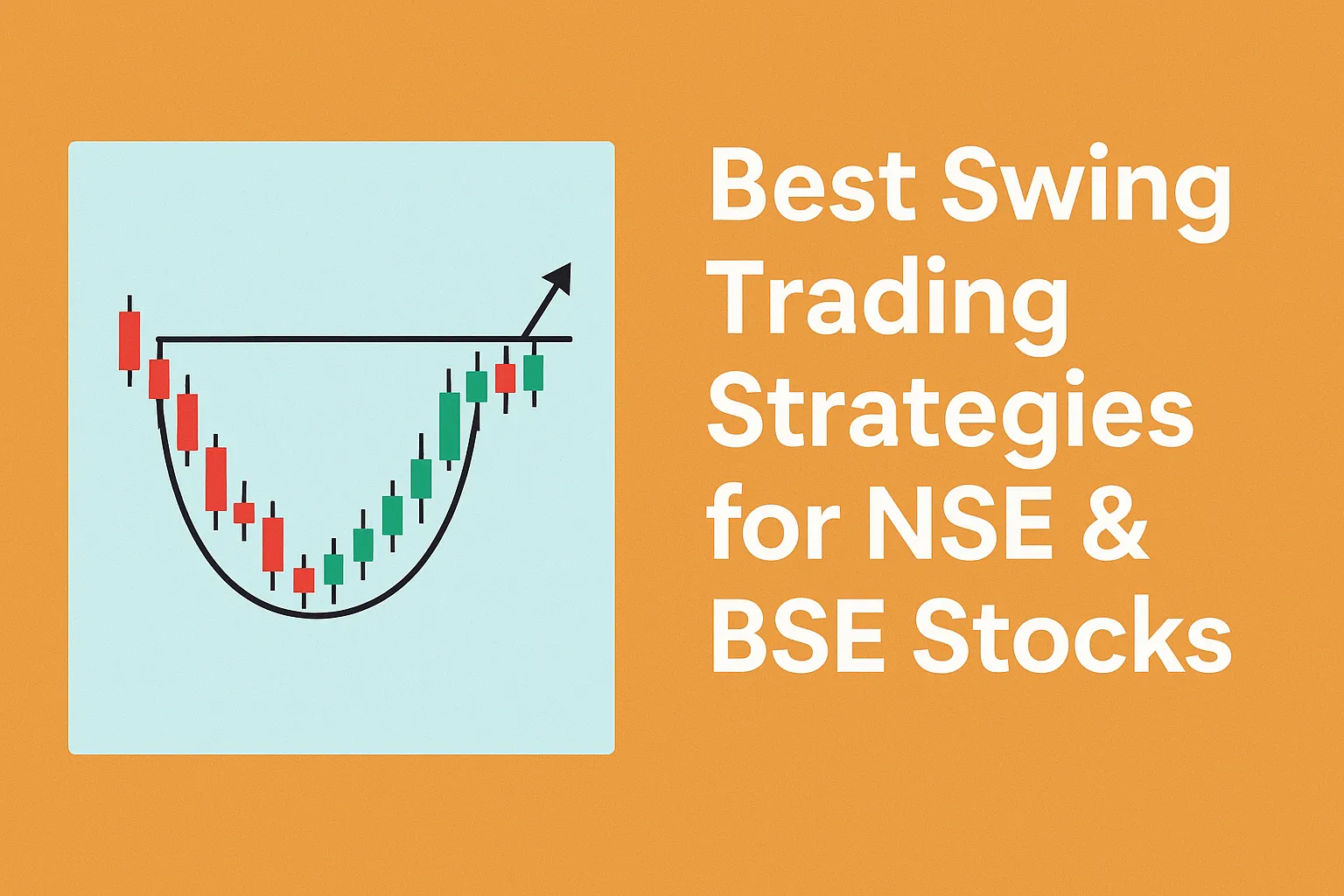
This strategy identifies stocks breaking above resistance or previous highs, especially when backed by strong volume.
Setup:
- Price breaks above key resistance zone
- Volume is above 2x average
- RSI rising from 50+
- Use daily timeframe
How to Trade:
- Buy on candle close above resistance
- Stop-loss below breakout zone
- Target = previous swing high or 1.5x risk
Example: Titan breaks above ₹3400 with volume surge → Buy setup
2. Moving Average Pullback Strategy (50 EMA)
This strategy uses the 50-day EMA to find strong uptrending stocks that temporarily pull back, offering good swing entries.
Setup:
- Price in long-term uptrend
- Pullback to 50 EMA with bullish candle (e.g., hammer, bullish engulfing)
- RSI bounces near 40–50
How to Trade:
- Buy after bullish candle forms above 50 EMA
- Stop-loss below the candle low
- Target = recent high or next resistance level
Example: HDFC Bank pulls back to 50 EMA and forms bullish engulfing
3. Support Bounce Strategy
Swing trading works great when price bounces off known support zones (horizontal levels or trendlines).
Setup:
- Stock corrects to a previously tested support
- RSI near oversold (30–40)
- Price forms reversal candle (Doji, Hammer)
How to Trade:
- Enter after price holds above support
- Stop-loss just below support level
- Target = resistance or previous high
Example: Infosys holds ₹1400 support zone with bullish reversal
4. Swing High–Low Reversal (Trend Change Strategy)
This advanced strategy works by identifying shifts in market structure — when the stock stops making lower lows and starts forming higher highs.
Setup:
- Stock in downtrend with lower lows
- Suddenly breaks structure by making a higher high and higher low
- MACD crossover and bullish price action
How to Trade:
- Enter after second higher low confirmation
- Stop-loss below swing low
- Target = trendline or next resistance
5. Channel Trading Strategy
Identify ascending or descending channels and trade bounces within the channel or breakouts outside the channel.
Setup:
- Well-defined channel on the daily chart
- Price approaches support of the channel
- Use Supertrend, RSI, or MACD as confirmation
How to Trade:
- Buy near channel support
- Stop-loss below channel
- Target = midline or upper boundary
Tools for Strategy Execution
| Tool | Use |
|---|---|
| TradingView India | Chart analysis, trendlines, EMA, RSI, MACD |
| Chartink | Screeners for volume, breakout, and pattern filters |
| Zerodha/Angel One | Order placement and stock selection |
| Screener.in | Fundamental filter (optional for long swings) |
Tips for Successful Swing Trading in NSE/BSE
- Use daily and 4-hour timeframes
- Trade liquid stocks from Nifty 50, Nifty Midcap, or sector leaders
- Always use a stop-loss
- Avoid trades during major news events
- Don’t overtrade — 1–2 quality setups per week are enough
Final Thoughts
Swing trading in NSE and BSE can be very effective when backed by structured, proven strategies. Whether you’re a beginner or an experienced trader, focusing on price action, volume, and indicator-based setups can offer reliable results.
Pick 1–2 strategies, practice with historical charts, and build your confidence before going live.
FAQs
Which swing trading strategy is best for NSE stocks?
The breakout + volume confirmation strategy is one of the most reliable in NSE stocks.
What is the ideal timeframe for swing trading?
The daily chart is the most popular, with 4-hour charts used for fine-tuning entries.
How long does a typical swing trade last?
Swing trades typically last 3 to 10 trading sessions, depending on the setup and market condition.
Can I swing trade small-cap stocks?
Yes, but ensure they are liquid and trending. Avoid low-volume or operator-driven stocks.
Do I need any paid tools to use these strategies?
Not necessarily. Free tools like TradingView (basic) and Chartink are enough to start with.