
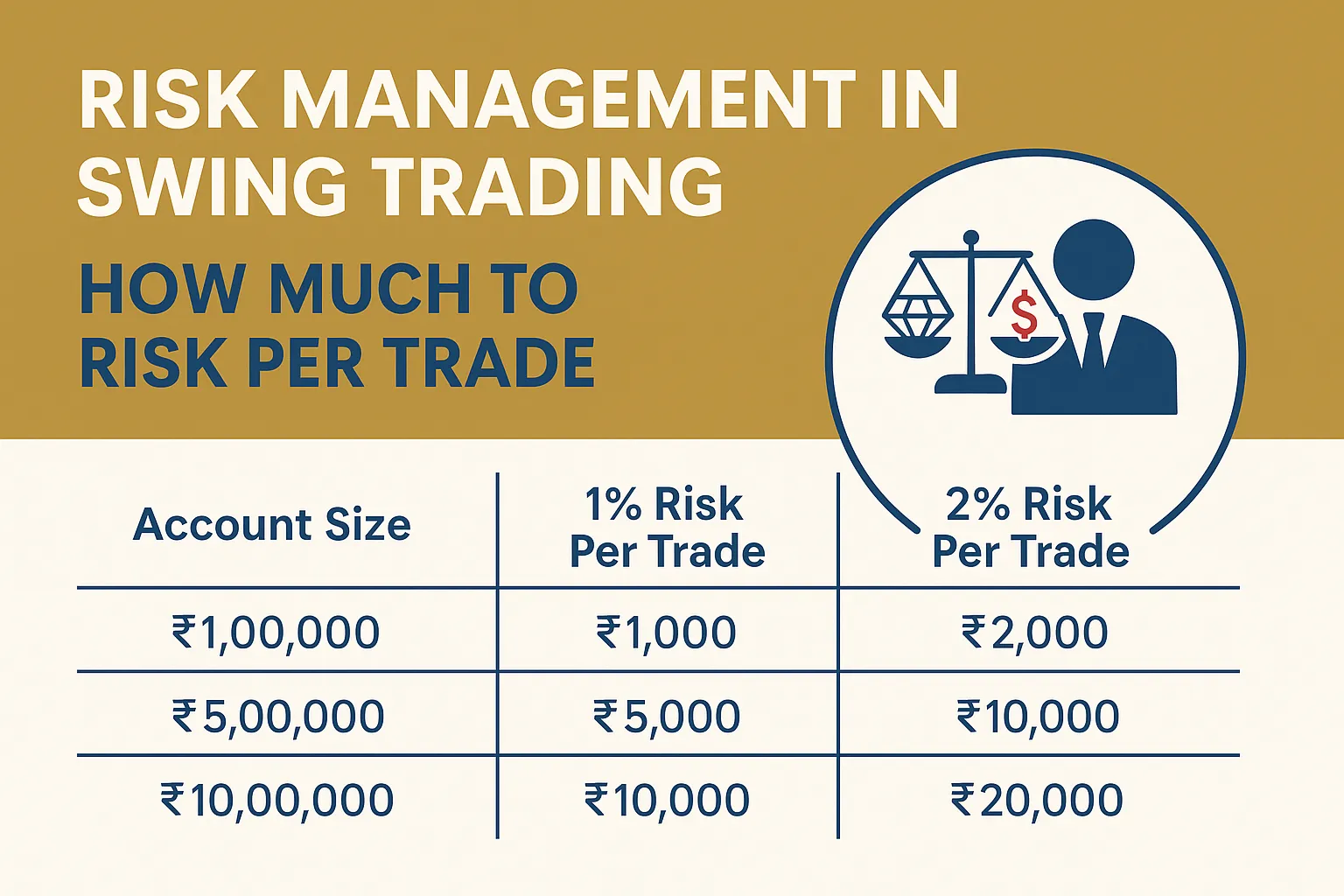
Risk Management in Swing Trading: How Much to Risk Per Trade
Swing trading can offer consistent gains — but only when combined with solid risk management. One of the most important rules successful swing traders follow is knowing how much to risk per trade. Without proper capital protection, even a good strategy can fail due to large drawdowns or emotional decision-making.
In this post, you’ll learn how much you should risk per trade, why it matters, and how to implement it in your own trading system.
Why Risk Management Matters in Swing Trading
Swing traders typically hold positions for a few days to a few weeks. During this time, markets can be volatile, and price swings are natural. Without clear risk rules, a single bad trade could:
- Wipe out a week or month’s worth of gains
- Trigger emotional reactions and revenge trades
- Jeopardize your trading capital and consistency
Risk management ensures that no single trade can significantly harm your portfolio.
The Golden Rule: Risk 1-2% Per Trade
Professional traders typically risk 1% to 2% of their total capital on each trade.
| Account Size | 1% Risk Per Trade | 2% Risk Per Trade |
|---|---|---|
| ₹1,00,000 | ₹1,000 | ₹2,000 |
| ₹5,00,000 | ₹5,000 | ₹10,000 |
| ₹10,00,000 | ₹10,000 | ₹20,000 |
Why 1-2%?
- It protects you from large losses
- You can survive a losing streak (e.g., 10 losing trades = only 10–20% loss)
- It allows consistent position sizing and strategy evaluation
How to Calculate Position Size Based on Risk
Use this simple formula:
Position Size = Risk Amount / (Entry Price – Stop Loss)
Example:
- Capital: ₹2,00,000
- Risk per trade: 1% = ₹2,000
- Entry price: ₹100
- Stop loss: ₹95 (₹5 risk per share)
Position size = ₹2,000 / ₹5 = 400 shares
This formula keeps your rupee loss per trade constant, even if the stock or strategy changes.
Adjusting Risk for Trade Confidence
Some traders adjust position size based on trade quality:
- A+ Setup: Risk up to 2%
- Standard Setup: Risk 1%
- Uncertain Setup: Risk 0.5% or skip the trade
But remember: never risk more than 2% per trade, no matter how confident you are.
Additional Risk Management Tips
- Use a stop-loss in every trade (don’t rely on mental stops)
- Don’t increase position size after a loss (avoid martingale systems)
- Stick to your pre-defined risk even during winning streaks
- Monitor your overall exposure (especially in correlated sectors)
Final Thoughts
Swing trading isn’t just about identifying entry and exit points — it’s about protecting your capital. Risking 1–2% per trade provides the right balance between profit potential and capital preservation.
By following proper risk management, you’ll not only trade more confidently but also stay in the game long enough to see your edge play out.
FAQs
How much capital should I risk in swing trading?
Most swing traders risk 1% to 2% of their capital per trade, depending on their risk tolerance and account size.
Is risking 5% per trade too much?
Yes. Risking 5% or more is considered aggressive and can cause large drawdowns during a losing streak.
Should I change my risk if I win or lose several trades?
No. Keep your risk per trade consistent to evaluate your strategy objectively.
What if my stop-loss is very wide?
Use smaller position sizes or skip trades with poor risk-to-reward ratios.
Can I swing trade without using a stop-loss?
It’s highly discouraged. Not using stop-losses exposes you to unlimited downside.